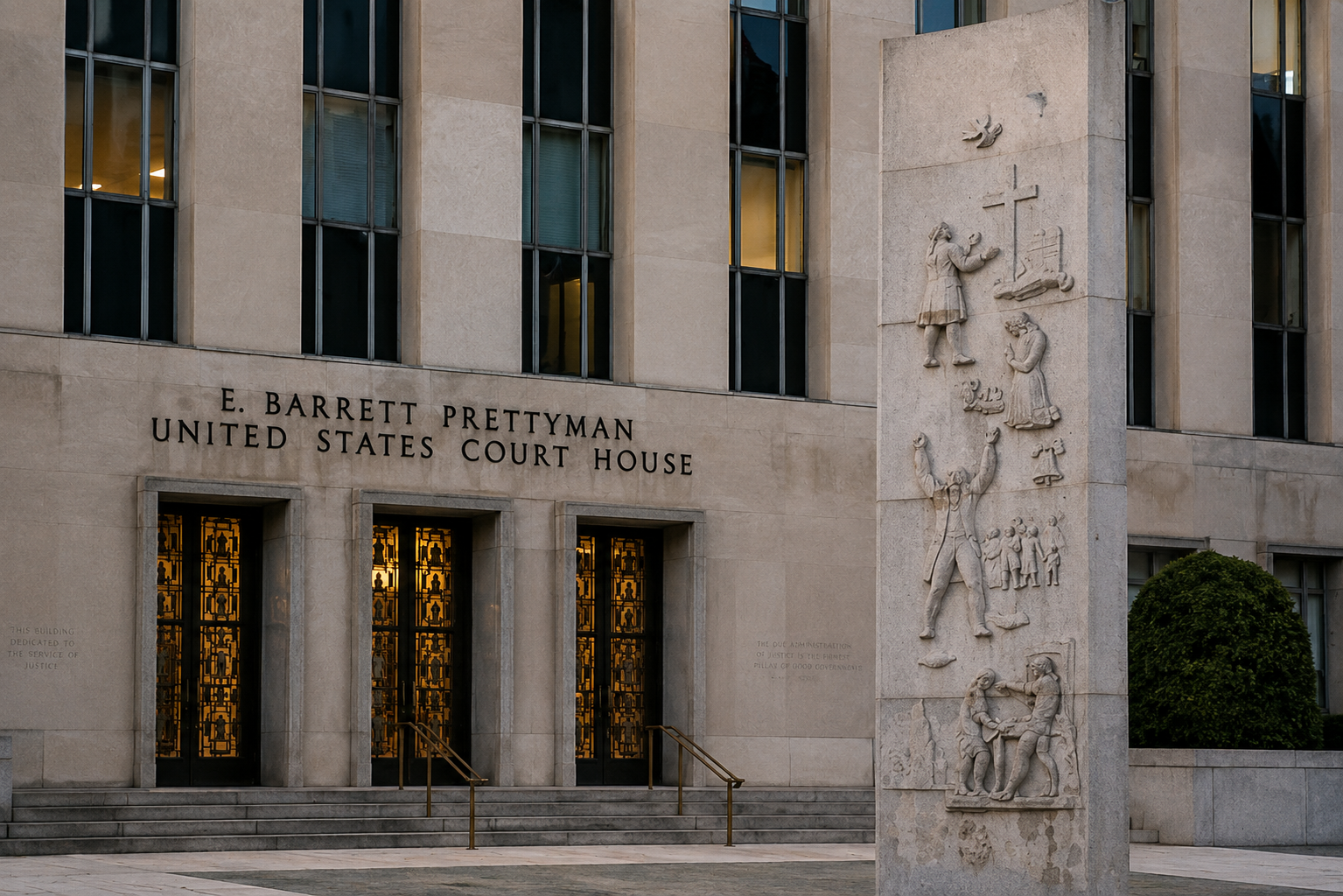
As the appeals are underway in the United States v. Google search case, key questions center on whether the remedies ordered by the District Court address Google’s anticompetitive conduct and restore meaningful competition in search. One critical issue is whether Google should be permitted to continue making the very payments for default search placement that the District Court found helped entrench its monopoly.
Against this backdrop, eight leading economists, legal experts, and technologists filed an amicus brief in the D.C. Circuit supporting the Department of Justice and State plaintiffs’ cross-appeal and urging the Court to strengthen the remedy in the landmark search monopolization case. The brief argues that although Judge Mehta correctly found Google liable for illegally maintaining its search monopoly, the remedy falls short because it allows Google to continue making billions of dollars in payments for default search placement – the very conduct the District Court identified as central to maintaining Google’s monopoly.
The brief makes clear that the current remedy neither stops the anticompetitive conduct nor restores competition. It also demonstrates that practical, effective, and implementable alternatives exist.
The brief details how:
Google’s monopoly profits allow it to outbid any rival: As long as Google can continue paying for default placement on every device, new entrants – including AI companies – will not be able to match Google’s payments, hampering their ability to gain the scale needed to compete.
The current remedy leaves Google’s exclusionary strategy largely intact: The District Court ordered important data-sharing and syndication remedies, but those measures cannot overcome the fact that competitors still lack meaningful default access to users if Google can continue purchasing the most valuable distribution channels. The mechanism that enabled Google’s monopoly remains largely unchanged, limiting the ability of rivals to compete on equal footing.
A better path forward exists: The brief describes a potential remedy, Pay for Half, a practical framework that would allow Google to continue paying for default placement on only a portion of devices. By limiting Google’s payments to no more than half of the devices within each of a distribution partner’s product lines, the proposal creates immediate opportunities for competing search providers – including emerging AI entrants – to gain meaningful distribution and compete at scale. This proposed remedy preserves revenue for distribution partners, maintains consumer choice, and addresses the concerns about disruption to device manufacturers and browser partners.
Effective antitrust remedies must do more than identify unlawful conduct, they must restore competition. As the appeals move forward, the Court can correct course to require a remedy that addresses the anticompetitive conduct at the heart of Google’s search monopoly. The amicus brief demonstrates how Pay for Half provides a practical, implementable framework for reopening the search market to rivals.