A Blueprint for Effective Implementation
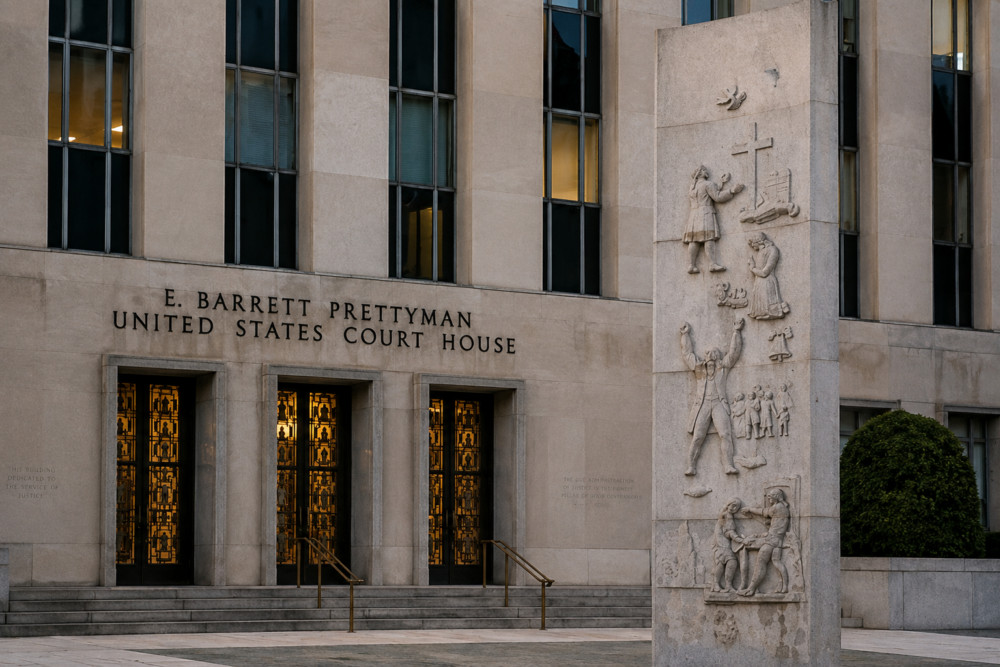
In December 2025, the U.S. District Court for the District of Columbia ordered remedies in the US v. Google search antitrust case. The remedy order includes technical measures designed to promote competition in online search, including requirements for Google to share data and license its technology to competitors, among other provisions.
Implementing and enforcing these obligations will require deep technical expertise and robust, ongoing monitoring to ensure compliance and effectiveness over time. Recognizing this need, the Court mandated the creation of a Technical Committee (TC) – an independent body of experts designed to support implementation.
KGI’s report “Designing the Technical Committee for the United States v. Google Search Antitrust Remedy: A Blueprint for Effective Implementation” provides a practical blueprint for the formation, structure, and operation of the TC. It is designed to serve as a resource for the TC, the Court, the litigants, and other stakeholders with an interest in ensuring that the TC is crafted to most effectively serve the goals of the remedial order.
This blueprint was developed in connection with KGI’s Future of Search Competition Workshop 2025, which convened experts shortly after the Court’s Remedy Opinion was issued to discuss implementation of the remedies. Participants at the workshop coalesced around the TC as a key vehicle for facilitating effective implementation of the Final Judgment. Although the blueprint was shaped by the views of workshop participants, the content represents the views of KGI and the blueprint contributors alone.
Drawing on insights from independent researchers and industry experts, the blueprint describes the key elements of a successful TC:
Expertise, staffing, and resources. The TC’s responsibilities demand expertise spanning software and AI engineering, privacy and security, business analysis, product management, and law. To maintain operational flexibility and avoid delays, the TC should function like a small, technically sophisticated organization, supported by a predictable annual budget.
Clear procedures for engagement with Qualified Competitors and third parties. The TC must engage systematically with Qualified Competitors (QCs) and other affected stakeholders in order to reduce information asymmetries. This requires clear complaint and dispute resolution procedures with standardized submission channels, indicative timelines, and escalation pathways to the Court when delays are attributable to Google. QCs will need robust protections against retaliation in order to engage candidly.
Proactive monitoring grounded in technical verification and market outcomes. The TC should implement proactive, technically-grounded compliance oversight rather than waiting for problems to surface. Key elements of such oversight include regular data reporting from Google’s Compliance Officer covering QC access timelines, data volumes, latency, complaint logs, and syndication performance; pre-deployment testing of compliance mechanisms before they are formally adopted; and clear benchmarks and key performance indicators to assess ongoing compliance.
Licensing frameworks that preserve competitive utility. The TC has a formative role to play in crafting the licensing frameworks envisioned in the remedial order. Shared user data must be priced at marginal cost, delivered frequently to ensure freshness, and include rich query metadata, all while utilizing robust privacy safeguards. Syndication licenses for both search results and search text ads must guarantee parity in latency and performance with Google’s own products and provide competitors with meaningful negotiation flexibility.
Preparedness for a contested implementation environment. Prior enforcement experience under European competition law suggests that Google has incentives to resist remedial measures by exploiting procedural ambiguities and adopting formally compliant but suboptimal designs. The TC will need to act proactively to detect strategic noncompliance before it becomes widespread.
Ultimately, a well-structured and fully empowered Technical Committee is essential to ensuring that the Court’s forward-looking remedies are translated into effective implementation, rigorous monitoring, and meaningful procompetitive outcomes in online search. Operationalizing the TC as described in this new blueprint will be key to realizing the benefits of the remedies.
Read the report here.